Sub-Total: $0.00
Partea a 4-a: Vestul Sălbatic și recucerirea Apogeului
Retrocedarea și renașterea conacului
Anii ’90 au reprezentat “Vestul Sălbatic” al viticulturii românești. După Revoluția din 1989, “Legea Fondului Funciar” a încercat să returneze viile moștenitorilor foștilor proprietari. Totuși, vastul imperiu de 500 de hectare al lui Iorgu nu a fost returnat ca o unitate compactă, ci a fost fragmentat în mii de fâșii longitudinale minuscule. Moștenitori care locuiau la oraș sau în străinătate s-au trezit brusc proprietari peste “trei rânduri de viță”, ceea ce a dus la un deceniu de neglijare, în care buruienile creșteau adesea mai înalte decât spalierii.
Marea reasociere
Sfârșitul anilor ’90 a adus o “goană după aur” a vizionarilor care au înțeles că Dealu Mare poate concura doar dacă pământul este reîntregit. A fost o epocă minuțioasă de diplomație și investiții. Pionierii moderni au trebuit să dea de urma a sute de proprietari individuali pentru a răscumpăra fâșiile din moșia originală a lui Iorgu. În această perioadă au sosit “vinificatorii zburători” din Franța și Italia, aducând cu ei tancuri din oțel inoxidabil, baricuri din stejar francez și convingerea că solul calcaros — despre care vorbea Daniel de la Mierla Albă — era un gigant adormit.
Restaurarea spiritului
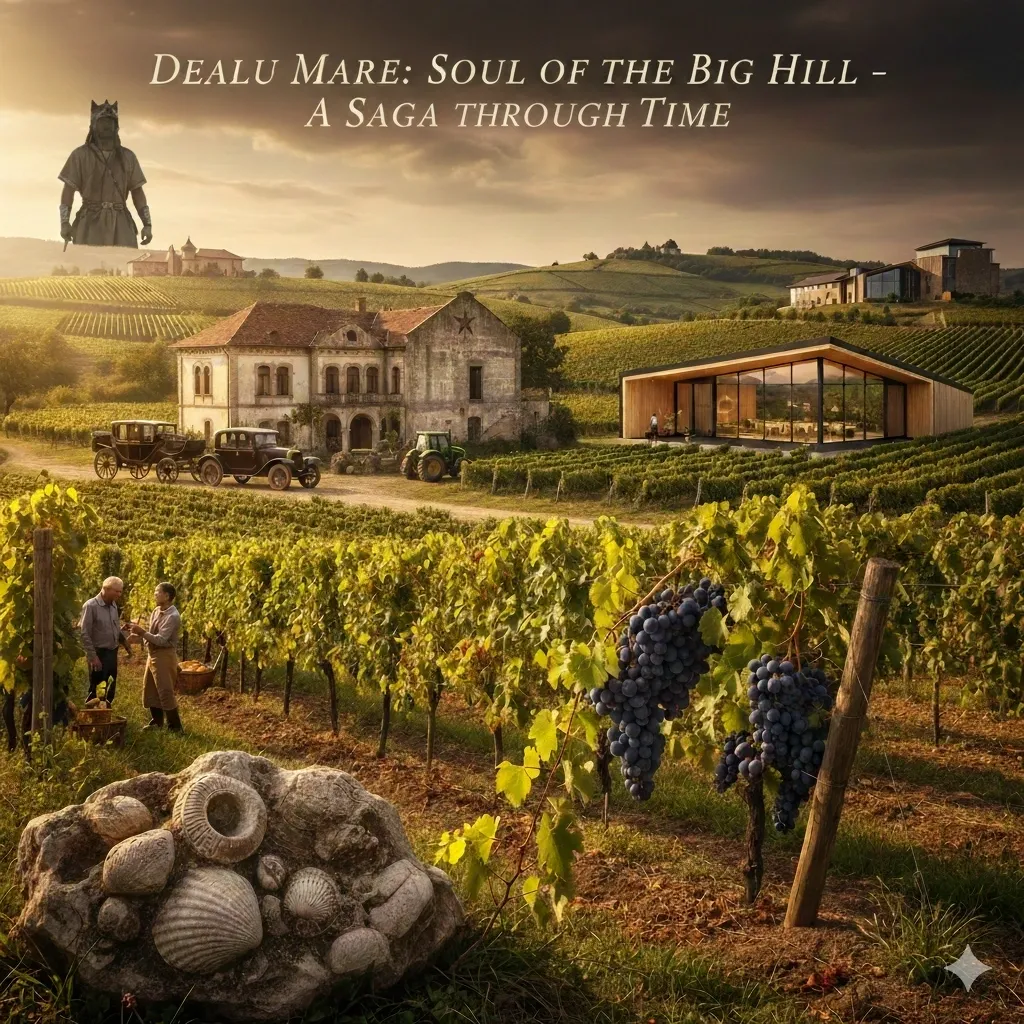
Astăzi, acel pământ găzduiește renașterea modernă a regiunii. Virgil Mândru, la Crama Apogeum, a făcut mai mult decât să cumpere viță-de-vie; el a restaurat meticulos conacul original al lui Iorgu, smulgându-l din deceniile de degradare socialistă. L-a transformat din nou într-un sanctuar pentru iubitorii de vin, un loc unde „sunetul” mării este din nou respectat.
La fel ca Iorgu în anii 1920, Virgil este mânat de o “nebunie” romantică de a produce o Fetească Neagră care să stea la vârful (Apogeum) viticulturii mondiale. Alături de el, pe fostele pământuri ale lui Iorgu, se află și alții — precum Domeniile Tohani, care continuă să producă gama “Principele Nicolae”, sau Licorna Winehouse — toți lucrând pentru a restabili prestigiul pe care aristocrația anilor ’30 îl ironiza cândva.
Part 4: The Wild West & Reclaiming the Apex
Restitution and the Rebirth of the Mansion
The 1990s were the “Wild West” of Romanian viticulture. Following the 1989 Revolution, the “Land Law” attempted to return the vineyards to the heirs of the original owners. However, Iorgu’s vast 500-hectare empire was not returned as a single unit; it was fragmented into thousands of tiny, longitudinal strips. Heirs who lived in cities or abroad were suddenly owners of “three rows of vines,” leading to a decade of neglect where the weeds often grew higher than the trellises.
*The Great Re-Aggregation*The late 90s saw a “gold rush” of visionaries who understood that Dealu Mare could only compete if the land was made whole again. This was a painstaking era of diplomacy and investment. Modern pioneers had to track down hundreds of individual owners to buy back the strips of Iorgu’s original estate. It was during this time that the “Flying Winemakers” from France and Italy arrived, bringing with them stainless steel tanks, French oak barriques, and the conviction that the limestone soil Daniel from Mierla Alba spoke of was a sleeping giant.
*The Restoration of the Spirit *Today, that same land is home to the region’s modern rebirth. Virgil Mândru at Crama Apogeum did more than just buy vines; he meticulously restored Iorgu’s original mansion, reclaiming it from decades of socialist decay. He turned it back into a sanctuary for wine lovers, a place where the “sound” of the sea is once again respected. Much like Iorgu in the 1920s, Virgil is driven by a romantic “madness” to produce a Fetească Neagră that stands at the pinnacle (Apogeum) of global viticulture. He is joined by others on Iorgu’s former lands—like Domeniile Tohani, which continues to produce the “Principele Nicolae” line, and *Licorna Winehouse*—all working to restore the prestige that the 1930s aristocracy once mocked.